
Steel assets often operate where moisture, soil chemistry, and changing temperatures create persistent corrosion risks. A protective finish must do more than improve appearance. Fusion Bonded Epoxy Coating forms a durable layer on prepared metal, helping separate steel from conditions that accelerate deterioration. Heatman Products recognises the importance of correct specification and workmanship when businesses plan protection. For owners, the decision involves selecting a product that suits the asset’s design, exposure, handling route, and inspection plan. A suitable system should fit the operating environment, from factory preparation through installation and routine service.
The Science Behind a Powder-Applied Finish
This coating begins as thermosetting epoxy powder rather than liquid paint. Operators prepare and heat the steel, then apply the powder through an approved process. On contact with the hot surface, particles melt, flow together, and cure into a continuous film.
Fusion Bonded Epoxy Coating helps maintain separation between steel and external contaminants. That bond supports Fusion Bonded Epoxy Coating performance when components must withstand handling, burial, or extended service.
Industrial Components That Benefit From It
Water transmission lines, oil and gas systems, and buried steel pipes can encounter damp soil and corrosive substances. A correctly specified system reduces direct contact between the pipe wall and its surroundings, while Fusion Bonded Epoxy Coating supports consistent external protection.
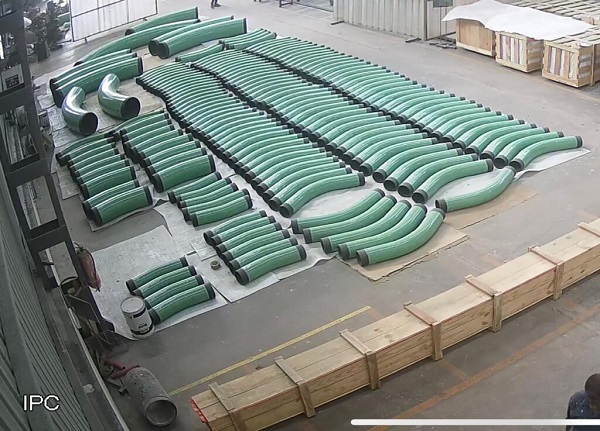
Manufacturers may also coat fittings, bends, valves, and compatible steel parts. Fusion Bonded Epoxy Coating is particularly relevant when external corrosion protection is a priority.
Protective Qualities That Support Service Life
Corrosion control is the primary purpose, but connected properties influence practical value. A uniform film limits pathways through which moisture and corrosive agents can reach steel, while Fusion Bonded Epoxy Coating provides a continuous barrier. Strong adhesion helps the layer remain attached when components are moved or installed, making Fusion Bonded Epoxy Coating useful for demanding handling conditions.
Within its specification, Fusion Bonded Epoxy Coating can resist abrasion and impact during loading, transport, lowering, and backfilling. Its electrical insulation properties can support pipeline corrosion-control designs, although they do not replace other required protection measures.
Surface Preparation Comes Before Powder Application
A sound finish starts before powder reaches the steel. The surface must be free from oil, grease, rust, mill scale, dust, and other contaminants. Abrasive blasting commonly creates the cleanliness and profile required by the project specification.
Preheating must bring the component into the approved temperature range, which allows Fusion Bonded Epoxy Coating to melt and bond as intended. If the steel is too cool, powder may not flow or bond correctly; excessive heat can also affect the result.
During application, trained staff control powder delivery, line speed, temperature, and film thickness. Edges and complex geometries need particular attention because coverage can vary.
Testing and Inspection at the Production Stage
Quality checks establish whether finished work meets agreed requirements. Thickness gauges measure the film. Visual examination can reveal pinholes, rough patches, or incomplete coverage.
Inspectors record results, identify repairs, and verify corrected areas through the required checks, confirming that Fusion Bonded Epoxy Coating meets project expectations.
Batch details, process readings, inspection reports, and repair records help owners trace coating history. Reliable records are an important part of a Fusion Bonded Epoxy Coating quality programme.
Protecting the Layer During Transport and Installation
A finished component can still suffer damage after inspection. Avoid dragging pipes across rough ground or allowing tools to strike the coated area.
Field joints need a separate compatible protection system because factory coating does not cover welded connections. Assess damage promptly and repair it with approved materials and methods.
The service life of Fusion Bonded Epoxy Coating depends on sound design, controlled application, careful installation, and suitable inspection.
Details to Set Before Production Begins
Define steel grade, component dimensions, operating temperature, installation method, and expected exposure before selecting a system. Confirm the required standard, coating thickness, test methods, and acceptance criteria with the project engineer. Discuss storage duration, transport distance, and repair arrangements.
These details help suppliers recommend compatible products and processes. Heatman Products can be included in discussions about industrial coating requirements, with final selection guided by technical data and written project specifications. Specifying Fusion Bonded Epoxy Coating correctly begins with understanding the asset rather than choosing by name alone.
An Alternative for Certain Chemical Exposures
Some facilities need protection systems designed for different exposures or substrates. Glass Flake Epoxy Coating Service may suit tanks, vessels, pipework, and structures exposed to selected chemicals or persistent moisture. Glass flakes create an overlapping barrier within the epoxy film, lengthening the path for permeating substances. Resin selection, preparation, thickness, and curing must match actual operating conditions; this service is not automatically interchangeable with a powder-applied pipeline system.
Conclusion
Long-term steel protection depends on matching the coating to the asset and controlling every stage of the work. Fusion Bonded Epoxy Coating can limit corrosion on suitable pipelines and components when preparation, heating, powder application, inspection, and installation follow the required specification. Heatman Products can be part of the discussion when reviewing industrial protection needs. Careful technical assessment and disciplined quality control give project owners a stronger basis for dependable performance.