
Mining projects depend on controlled storage, careful water management, and durable civil works. A small leak can affect operations, soil, and nearby water resources. Geomembrane Liners for Mining provide a low-permeability layer in facilities designed to hold process liquids or limit seepage. Their performance relies on more than the sheet itself. Each installation must account for changing site demands, material handling, inspection access, and the consequences of unexpected leakage. Clear engineering decisions help protect workers, surrounding land, and valuable process resources. Engineers must consider the material, supporting layers, construction sequence, and inspection plan together.
Start With the Containment Duty
The first design task is to define what the facility must contain. A pond holding process water has different demands from a heap leach pad or a tailings storage area.
This duty statement gives Geomembrane Liners for Mining a clear performance target. The specification should describe acceptable permeability, chemical resistance, mechanical strength, and expected service conditions.
Design the Ground Before the Sheet
A liner needs a stable surface beneath it. Geotechnical investigations help identify weak soils, settlement risks, groundwater pressure, and slope concerns. Designers can then specify excavation, compaction, grading, and any required soil improvement.
The supporting structure matters because Geomembrane Liners for Mining transfer loads to the prepared foundation, so movement below a barrier can create strain above it. For Geomembrane Liners for Mining, engineers should review slope stability, anchorage trenches, drainage paths, and the effect of heavy machinery.
Select the Polymer for Actual Exposure
Different polymers offer different balances of flexibility, strength, and chemical resistance. High-density polyethylene is widely used where chemical resistance and low permeability are important.
Do not select by thickness alone. Review tensile behaviour, puncture resistance, stress-crack resistance, dimensional stability, and compatibility with the stored material. Geomembrane Liners for Mining should be supported by current technical data and suitable test reports.
Geomembrane Liners for Mining Build in Drainage and Collection
Containment design also needs a plan for water movement. Collection pipes, sumps, drainage layers, and monitoring points must work with the barrier rather than conflict with it.
A well-coordinated layout helps Geomembrane Liners for Mining work as one part of a complete facility.
Control Panel Layout and Welding
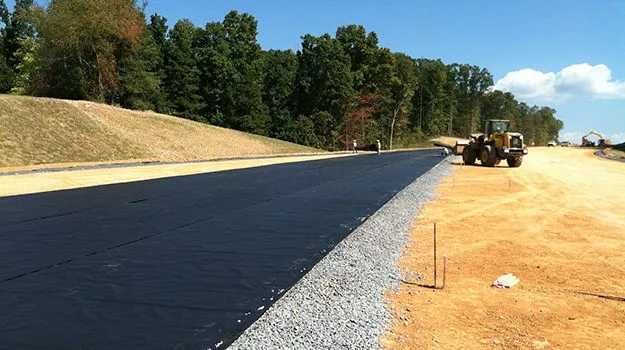
Installation planning begins with panel drawings. The layout should limit unnecessary seams, account for slope direction, and allow safe access for welding equipment. Crews should check weather conditions and avoid placing panels when wind or rain makes control difficult.
Seams require trained operators, calibrated equipment, and documented procedures. Trial welds help confirm settings before production work begins. For Geomembrane Liners for Mining, inspectors should check seam quality using the specified destructive and non-destructive methods.
Protect the Barrier During Construction
Other construction activities can damage an exposed liner. Vehicles, sharp tools, dropped materials, and careless placement of cover soil create avoidable risks. The project method should define approved routes, equipment limits, protective layers, and supervision duties.
Cover material must meet the design requirements and should be placed without dragging or puncturing the sheet. Geomembrane Liners for Mining need a clear handover between installation crews and teams working on pipes, drainage, and cover layers.
Verify Quality With Traceable Records
Quality assurance should begin when materials arrive. Check roll identification, dimensions, packaging, certificates, and visible condition. During installation, record panel numbers, seam locations, test results, repairs, weather, and inspection approvals. Keep drawings updated as work progresses.
These records make Geomembrane Liners for Mining easier to audit and maintain. They also help operators locate a panel or seam if a repair becomes necessary. Before commissioning, review the completed system against approved drawings and acceptance criteria.
Prepare for Operation and Closure
A containment facility changes during its life. Operators should inspect exposed areas, drainage outlets, collection equipment, and signs of settlement at planned intervals. They should control access and use approved repair methods when damage occurs. Routine reviews keep Geomembrane Liners for Mining aligned with site conditions.
Closure planning also belongs in the original design. Geomembrane Liners for Mining may remain part of a final cover or containment arrangement, depending on the approved closure plan. Designers should define long-term protection, access restrictions, and inspection responsibilities before operations end.
A Separate Role in Waste Disposal
Liner for Waste Landfill systems form part of engineered facilities that manage waste and leachate. They are designed to limit liquid migration into surrounding ground and protect groundwater when installed as specified. Typical designs may combine geomembranes, protective geotextiles, drainage layers, and leachate collection pipes. Waste chemistry, local regulations, foundation conditions, and closure requirements determine the final arrangement. Although some materials may be similar, landfill design requires its own technical review and approvals.
Working With a Qualified Materials Partner
A supplier should provide product specifications, test documentation, handling guidance, and clear information about available technical support. The project team must verify that each product meets the design rather than assume every sheet has the same properties. Geomembrane Liners for Mining should be approved against documented site requirements. MACRO SHEET INDIA LIMITED can be contacted to discuss relevant sheet and geosynthetic material requirements.
Conclusion
Successful mine containment comes from coordinated engineering, not a single material choice. Geomembrane Liners for Mining must suit the stored substance, ground conditions, facility geometry, and operating plan. Careful preparation, controlled welding, protective construction practices, and documented testing all matter. With regular inspections and a clear closure strategy, operators can manage Geomembrane Liners for Mining responsibly and support dependable site performance.