
Industrial processes often require fast and uniform mixing. However, traditional mixing equipment can need motors, shafts, and regular maintenance. An Inline Static Mixer offers a simpler approach. It mixes fluids as they move through a pipeline.
The mixer uses specially designed internal elements to divide, redirect, and recombine flowing materials. As a result, it creates a consistent mixture without external power for mechanical movement.
Today, industries use static mixing systems for water treatment, chemicals, polymers, food processing, and many other applications. The right design can improve product quality while reducing equipment complexity.
What Is an Inline Static Mixer?
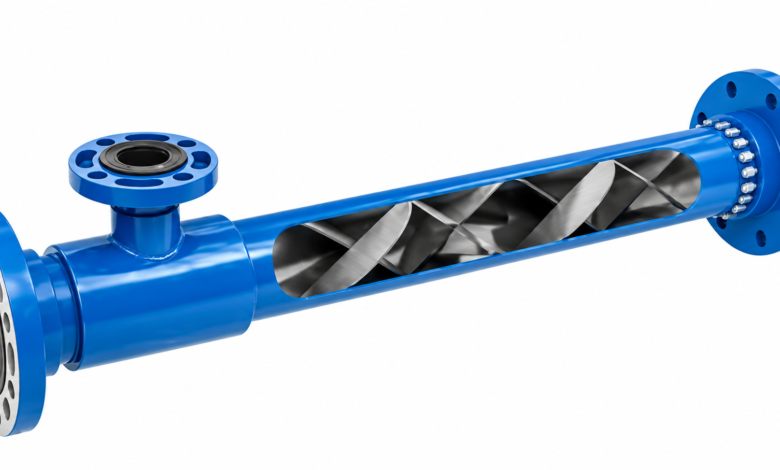
An Inline Static Mixer is a pipeline device designed to blend two or more fluids continuously. It contains fixed mixing elements inside a pipe or housing. These elements create controlled changes in fluid direction and velocity.
Unlike conventional agitators, the mixer does not contain rotating blades. Instead, the flowing material provides the energy needed for mixing.
The basic process is simple:
- Fluids enter the mixing section.
- Internal elements split the flow.
- The streams change direction.
- Different fluid layers combine again.
- The process repeats through the mixer.
- A more uniform mixture exits the system.
Because the process happens inside the pipeline, the equipment can fit easily into continuous production systems.
How Does Static Mixing Work?
Static mixing depends on fluid movement and mixer geometry. Each internal element changes the flow pattern. Consequently, the fluids experience repeated division and recombination.
This action improves contact between different materials. It can also help achieve better concentration uniformity.
For example, a chemical plant may need to mix a liquid chemical with water. A properly selected mixer can distribute the chemical throughout the water before the mixture reaches the next process stage.
Key Benefits of an Inline Static Mixer
An Inline Static Mixer can provide several practical benefits. These advantages make it useful for both new plants and process upgrades.
Consistent Mixing
Uniform mixing is important for stable product quality. Static mixing elements create repeated flow patterns. Therefore, they can help distribute additives, chemicals, or other fluids more evenly.
This consistency becomes especially important when precise chemical concentrations are required.
Low Maintenance
Static mixers have no motor or rotating shaft. Therefore, they have fewer moving components than mechanical mixing systems.
This simple construction can reduce mechanical wear. It can also lower maintenance requirements when the mixer operates under suitable process conditions.
Compact Installation
Space is often limited in industrial plants. An inline design can fit directly into existing pipelines.
As a result, companies may avoid installing large mixing tanks. This can make static mixers useful where floor space is restricted.
Continuous Operation
Many industries operate continuous production lines. Static mixers support this type of operation because mixing takes place while the material flows.
The system does not need a separate batch mixing stage. Therefore, it can help maintain a steady production process.
Efficient Material Blending
A well-designed static mixer can improve contact between different materials. It can support applications involving liquids, gases, chemicals, polymers, and other process materials.
However, performance depends on factors such as viscosity, flow rate, pressure drop, and mixer design.
Common Applications of Inline Static Mixer Systems
Static mixing technology has applications across several industries. Each industry uses the equipment according to its process requirements.
Water and Wastewater Treatment
Water treatment plants often need to distribute chemicals evenly. For example, treatment chemicals may need to mix with water before filtration or other treatment stages.
An Inline Static Mixer can provide rapid chemical dispersion inside the pipeline. This can support consistent treatment performance.
Chemical Processing
Chemical plants often handle multiple liquids and additives. Proper mixing helps maintain process consistency and product quality.
Static mixers can support dilution, chemical blending, neutralization, and other continuous operations.
Polymer Processing
Polymer applications may require controlled mixing of chemicals, water, or polymer solutions. Uneven mixing can affect process results.
Therefore, static mixing equipment can help create a more uniform flow before the next production stage.
Food and Beverage Processing
Food production often requires controlled blending of liquids and ingredients. The equipment must also match hygiene and cleaning requirements.
With suitable materials and sanitary construction, static mixers can support continuous food processing applications.
Gas and Liquid Mixing
Some industrial processes require gas to mix with a liquid stream. Static mixer elements can improve contact between the two phases.
This approach can support processes such as aeration, chemical treatment, and gas absorption.
How to Select the Right Static Mixer
Choosing the correct mixer requires more than checking the pipe size. Process conditions play a major role in performance.
Consider these important factors:
- Flow rate of each material
- Fluid viscosity
- Operating temperature
- Operating pressure
- Required mixing quality
- Pipe diameter
- Material compatibility
- Allowable pressure drop
- Number of fluids being mixed
First, identify the properties of the materials. Next, determine the required mixing level. Then, select the mixer geometry and construction material accordingly.
A process engineer should also review the pressure drop. An unsuitable design may create unnecessary energy requirements.
Why Mixer Design Matters
Not every process needs the same internal mixing elements. Different designs create different flow patterns.
For example, low-viscosity fluids may require a different configuration than highly viscous materials. Similarly, gas-liquid applications can need specialized designs.
Therefore, proper sizing is essential. The mixer should match the actual process rather than simply matching the pipeline diameter.
This is where experienced manufacturers can provide useful engineering guidance. Premix Technologies develops mixing solutions for different industrial process requirements.
Improving Industrial Process Efficiency
Modern industries focus heavily on efficiency. They want reliable equipment that supports production without unnecessary complexity.
An Inline Static Mixer can contribute to this goal by combining mixing and transportation within the same pipeline.
Furthermore, the absence of moving parts can simplify installation and maintenance. The compact design can also reduce the space required for mixing equipment.
However, businesses should evaluate the complete process. Mixer selection, pump capacity, pressure drop, material compatibility, and operating conditions should work together.
Frequently Asked Questions (5 FAQs)
1. What is an Inline Static Mixer used for?
An Inline Static Mixer is used to blend two or more materials inside a pipeline. It is common in chemical, water treatment, polymer, food, and industrial processes.
2. Does a static mixer have moving parts?
No. A static mixer normally contains fixed internal elements. The flowing materials create the movement required for mixing.
3. Can static mixers handle different fluids?
Yes. Static mixers can handle many fluid combinations. However, the design must match viscosity, flow rate, temperature, pressure, and material properties.
4. Are static mixers suitable for continuous processes?
Yes. They work well in continuous processing systems. Materials can mix while moving through the pipeline.
5. How do I choose the right static mixer?
Start by reviewing flow rates, viscosity, pipe size, pressure, temperature, and required mixing quality. Then select a design that matches those conditions.
Conclusion
An Inline Static Mixer provides a practical way to achieve continuous and uniform mixing. Its fixed internal elements create repeated flow changes without using rotating equipment.
As a result, industries can benefit from compact installation, simple operation, and reduced mechanical complexity. However, correct sizing remains important for reliable performance.
For companies evaluating industrial mixing solutions, Premix Technologies can help identify suitable mixing approaches based on specific process requirements. A properly selected Inline Static Mixer can support consistent blending and smoother industrial operations.
For your next mixing project, review your process conditions carefully and consult a qualified mixing solution provider before selecting the equipment.